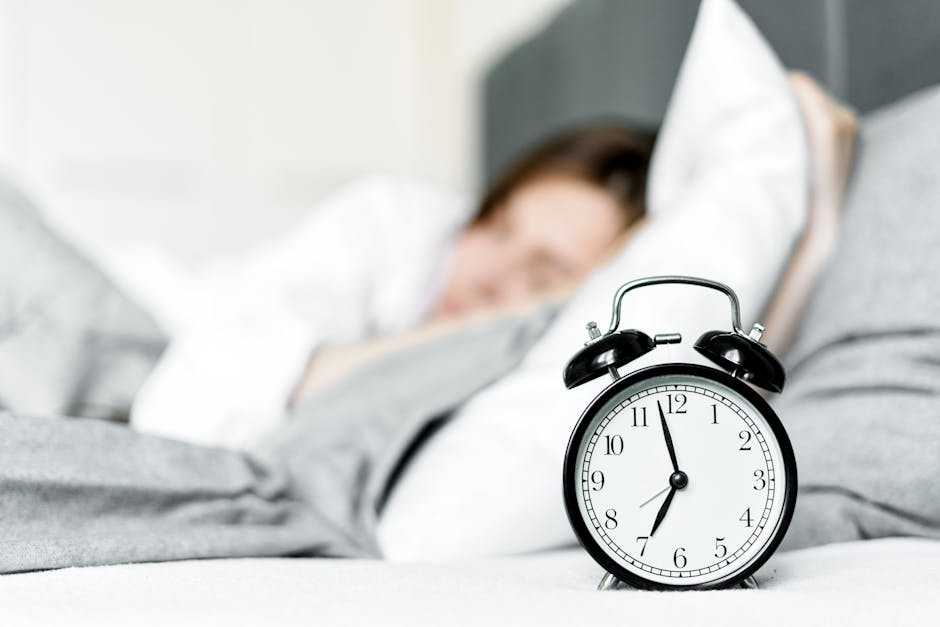
Sleeping under 7 hours is linked to shorter lifespans. Learn why your personal sleep floor matters more than chasing 8 hours.
The Number Researchers Keep Landing On
Across large population studies — some tracking hundreds of thousands of adults over decades — seven hours keeps emerging as a threshold. Below it, risks for cardiovascular disease, metabolic dysfunction, and all-cause mortality begin climbing in ways that are hard to ignore.
This isn't one rogue study. The association between short sleep and shortened healthy lifespan has been replicated often enough that major health organizations now list seven hours as the adult minimum, not a suggestion.
What's worth noting is what the data doesn't say. It doesn't say eight hours is magic, or that nine is better than eight. The curve flattens considerably once you're solidly in the seven-to-nine range. The meaningful signal is what happens below seven — and the drop isn't gradual. For many health outcomes, the risk curve steepens once you cross that line.
That's the conversation worth having. Not 'are you sleeping enough?' in a vague, guilty way. But rather: do you know where your floor is, and are you regularly falling through it?
What 'Floor' Means — and Why It's Personal
The sleep floor isn't a universal prescription. It's the point below which your body starts operating in a meaningful deficit — cognitively, metabolically, immunologically.

Photo by KATRIN BOLOVTSOVA on Pexels
Some people genuinely function well on seven hours. Others need closer to eight to feel and perform at baseline. The research can't tell you which camp you're in. What it can tell you is that almost nobody's floor is below six, and the people who claim they 'only need five' are, in most cases, adapted to chronic impairment rather than actually thriving on it. Sleep research calls this 'sleep debt blindness' — you stop noticing how impaired you are because impairment becomes your normal.
Finding your floor is practical: it's the sleep duration at which you wake without an alarm feeling genuinely rested, sustain focus through the afternoon, and don't need caffeine to function before noon. That's a real signal, not a luxury standard.
Knowing your floor also means you can defend it — which turns out to be most of the work.
What Happens When You Cross It Regularly
One short night is inconvenient. A pattern of falling below your floor is something else.
Chronic short sleep is associated with elevated inflammatory markers, impaired glucose regulation, higher blood pressure, and reduced immune response. These aren't abstract risks — they're the upstream conditions for the diseases that shorten healthy life and reduce quality of the years you do have.
There's also a compounding effect that's easy to underestimate. Sleep is when the body does its maintenance: cellular repair, memory consolidation, hormonal regulation. Skimp on it consistently and you're not just tired — you're running deferred maintenance on systems that don't send obvious invoices until much later.
For people in their 40s and 50s especially, this matters relationally. The energy to show up for your kids, your partner, your aging parents — that's not separate from your sleep. It's downstream of it. Being present isn't just about being alive; it's about having the cognitive and emotional bandwidth to actually be there.
The Usual Suspects That Push You Below the Line
Most chronic short sleepers aren't choosing less sleep. They're absorbing it from somewhere else.

Photo by Craig Adderley on Pexels
Late screens are the obvious one — not because blue light is a conspiracy, but because stimulating content delays sleep onset in ways that are hard to feel until you look at the clock. A 10:30 bedtime that drifts to 11:15 four nights a week is nearly an hour of weekly sleep debt without a single conscious decision to sleep less.
Work encroachment is the other common culprit — the late email, the early call, the project that bleeds into the hour you'd reserved for sleep. Most people treat sleep as the flexible variable in their schedule rather than the fixed one. The research argues it should be the other way around.
Alcohol deserves a mention here too. It reduces sleep latency (you fall asleep faster) while fragmenting the second half of the night, compressing the restorative deep and REM sleep. People often report 'sleeping fine' after a drink without realizing the quality of that sleep is significantly reduced.
Defending Your Floor Without Overhauling Your Life
Sleep optimization culture has a tendency to make this feel like a project — blackout curtains, temperature regulation, supplement stacks, sleep trackers. Some of those things have real evidence behind them. But for most people, the gap between current sleep and adequate sleep closes with simpler moves.
A consistent wake time does more heavy lifting than almost anything else. Your circadian rhythm organizes around it, and a steady anchor makes it easier to fall asleep at a reasonable hour. It also means lost sleep on one night doesn't cascade into a week of disruption.
Treating your sleep window as a commitment rather than a preference is the other shift. If you need seven and a half hours and you want to be up at 6:30, your phone goes face-down at 10:45. Not as a wellness gesture — as simple arithmetic.
None of this requires perfection. A few nights a month below your floor, especially with genuine recovery opportunity, is just life. The question is whether you're regularly, structurally sleeping less than your body needs — and whether you'd even know.
What the Research Actually Promises (and Doesn't)
It's worth being honest about what sleep science can and can't tell you.
Population studies show clear associations between chronic short sleep and worse health outcomes across large groups. They can't predict what your individual trajectory looks like. Someone who sleeps six hours and exercises, eats well, and has strong social ties may fare better than population averages — and someone who sleeps eight hours but smokes and is isolated may not. The variables interact.
What the research can say with confidence is that sleep below seven hours is consistently associated with elevated risk across multiple serious outcomes, and that this risk is modifiable. You're not stuck with your current sleep pattern the way you're stuck with your genetics.
That's the genuinely encouraging part. Sleep is one of the highest-leverage variables you can actually shift. Not because it's a longevity hack, but because adequate sleep makes every other healthy behavior easier — you eat better, move more, and show up more fully for the people in your life when you're not running on a deficit.
Conclusion
The goal here isn't to stress you out about every night you've fallen short. It's to make the concept of a sleep floor real and personal — something you can identify, protect, and notice when you're crossing it. Most people can close a meaningful sleep gap without a total lifestyle overhaul. They just have to decide that sleep is a non-negotiable rather than the first thing to borrow from. If you want to understand how your sleep habits fit into your broader picture, the Years Gained calculator takes about three minutes and asks twelve questions — including sleep. Your number is at the end. No signup, no paywall: https://yearsgained.com/calculate/1